Location: Boston, MA
Status: 2025-2026
Client: City of Boston
Collaborators: Gehl (Prime Consultant), Grayscale, RKG, Agora Partners
Impact Area: Spaces and Places of Belonging
Privately Owned Public Spaces (POPS) are the plazas and open spaces produced in exchange for development bonuses. POPS are usually treated as concessions extracted from developers and delivered wherever market activity happens to concentrate, a model that emerged as a pragmatic answer to a real limit: cities rarely have the capacity to build enough public space through public means alone, so they trade zoning bonuses for privately developed public spaces.
The challenges with POPS are two-fold: bonuses are often granted where capital already clusters, while the neighborhoods carrying the greatest open space deficit lie elsewhere; and even where these spaces get built, the gap between their regulatory intent and their lived reality is often wide.
Developed for the City of Boston with Gehl, Spaces for You reframes POPS as a citywide infrastructure tool. We mapped the city by open-space need and decoupled the geographic link between a development bonus and its community benefit, so investment can be directed toward the neighborhoods where it does the most good. We also rewrote the design and management guidelines that determine whether a public space stays public, closing the loopholes through which POPS so often fail in practice: privatized seating, gated hours, plazas that signal who belongs.
Location: Boston, MA
Status: 2025-2026
Client: City of Boston
Collaborators: Gehl (Prime Consultant), Grayscale, RKG, Agora Partners
Impact Area: Spaces and Places of Belonging
Privately Owned Public Spaces (POPS) are the plazas and open spaces produced in exchange for development bonuses. POPS are usually treated as concessions extracted from developers and delivered wherever market activity happens to concentrate, a model that emerged as a pragmatic answer to a real limit: cities rarely have the capacity to build enough public space through public means alone, so they trade zoning bonuses for privately developed public spaces.
The challenges with POPS are two-fold: bonuses are often granted where capital already clusters, while the neighborhoods carrying the greatest open space deficit lie elsewhere; and even where these spaces get built, the gap between their regulatory intent and their lived reality is often wide.
Developed for the City of Boston with Gehl, Spaces for You reframes POPS as a citywide infrastructure tool. We mapped the city by open-space need and decoupled the geographic link between a development bonus and its community benefit, so investment can be directed toward the neighborhoods where it does the most good. We also rewrote the design and management guidelines that determine whether a public space stays public, closing the loopholes through which POPS so often fail in practice: privatized seating, gated hours, plazas that signal who belongs.

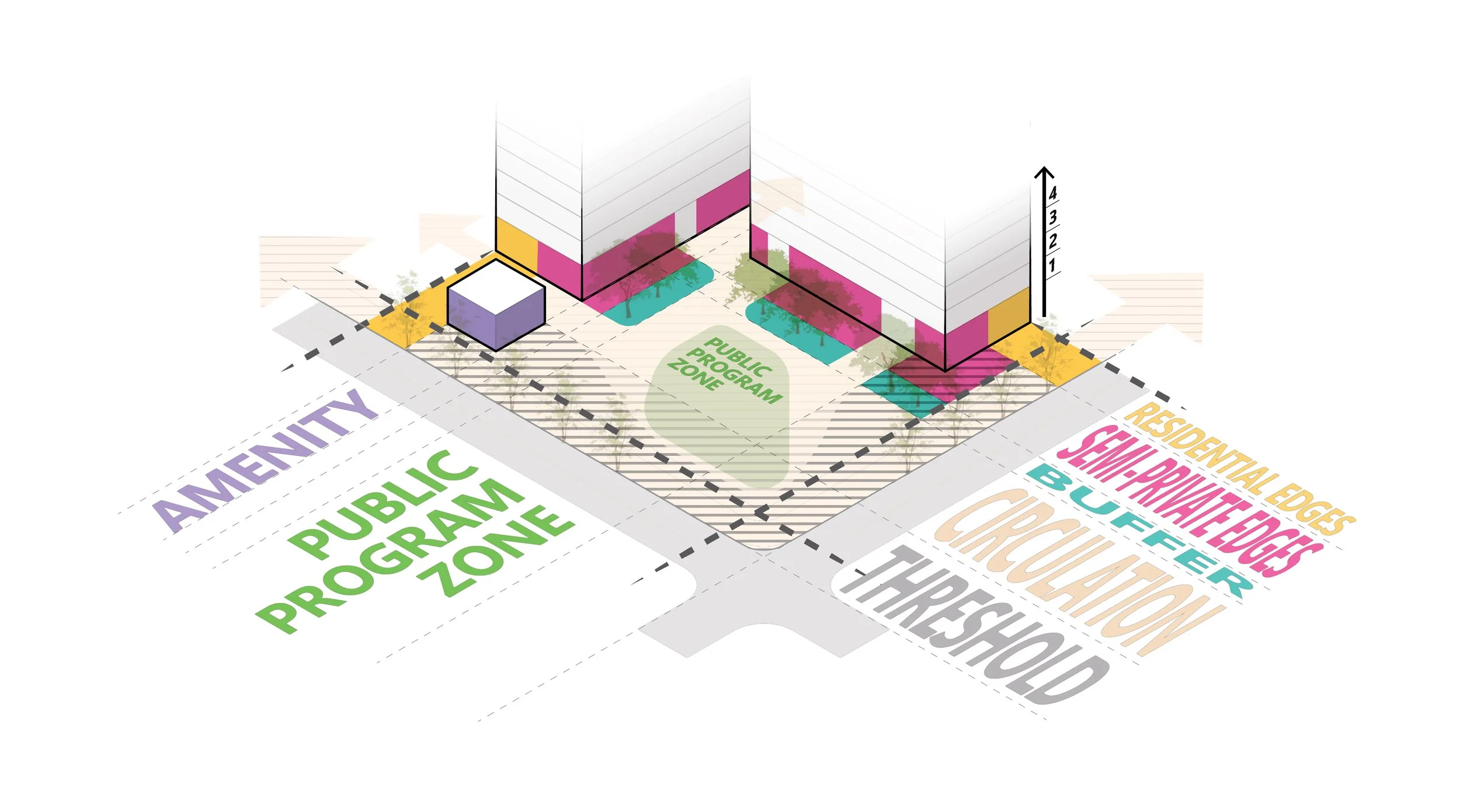 Image 1 of 6
![26.02.30 Revised Typologies [Review Copy].png](https://images.squarespace-cdn.com/content/v1/64515204013ff73c26e3d5a4/95acd85e-73e9-4331-a283-2af5d5173c9e/26.02.30+Revised+Typologies+%5BReview+Copy%5D.png) Image 2 of 6
Image 2 of 6
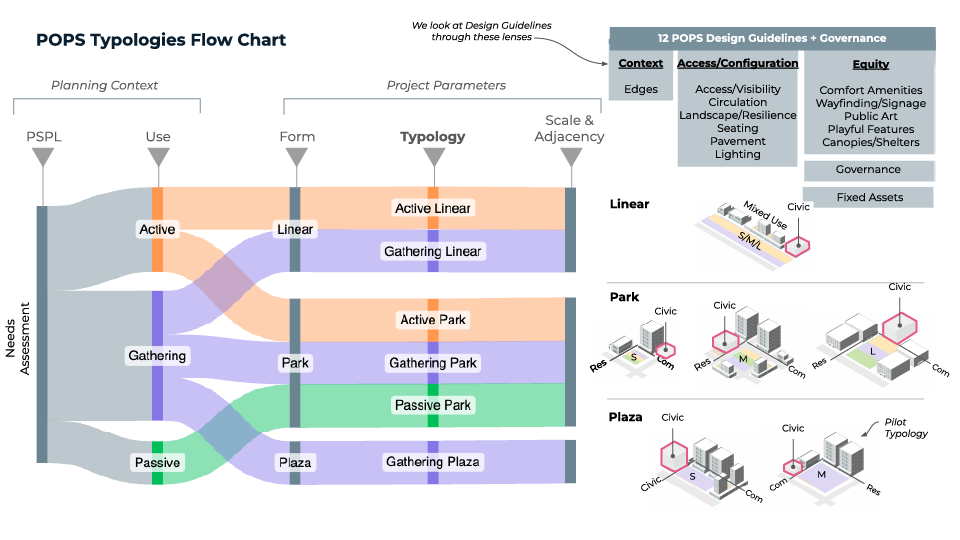 Image 3 of 6
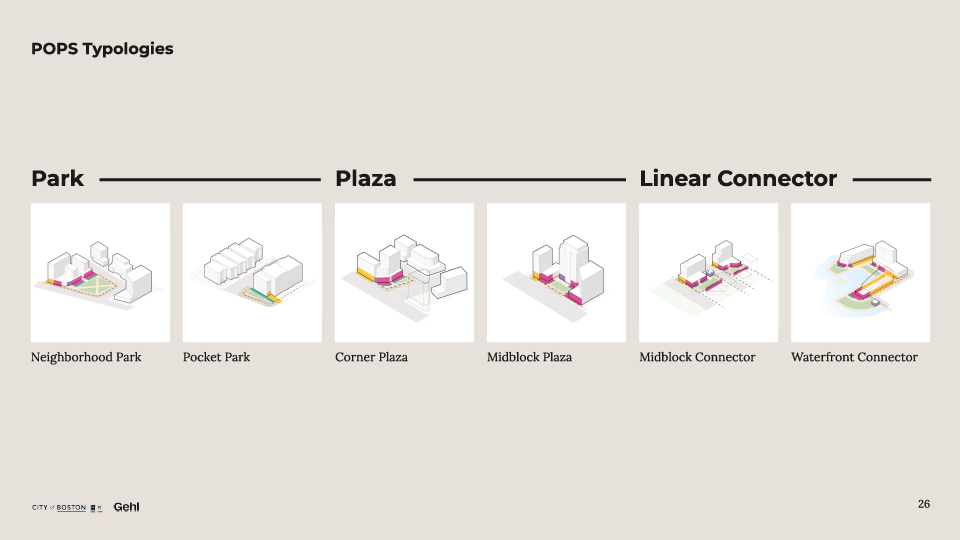 Image 4 of 6
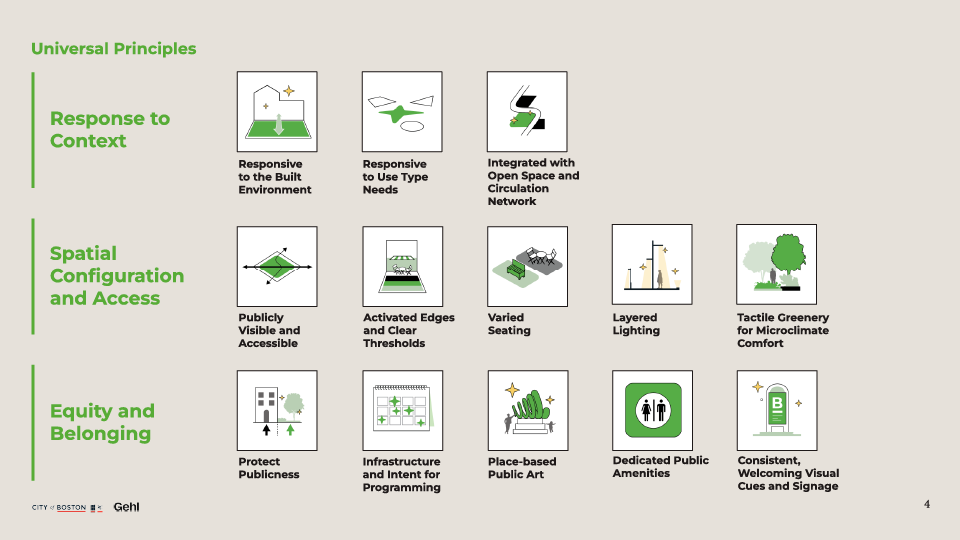 Image 5 of 6
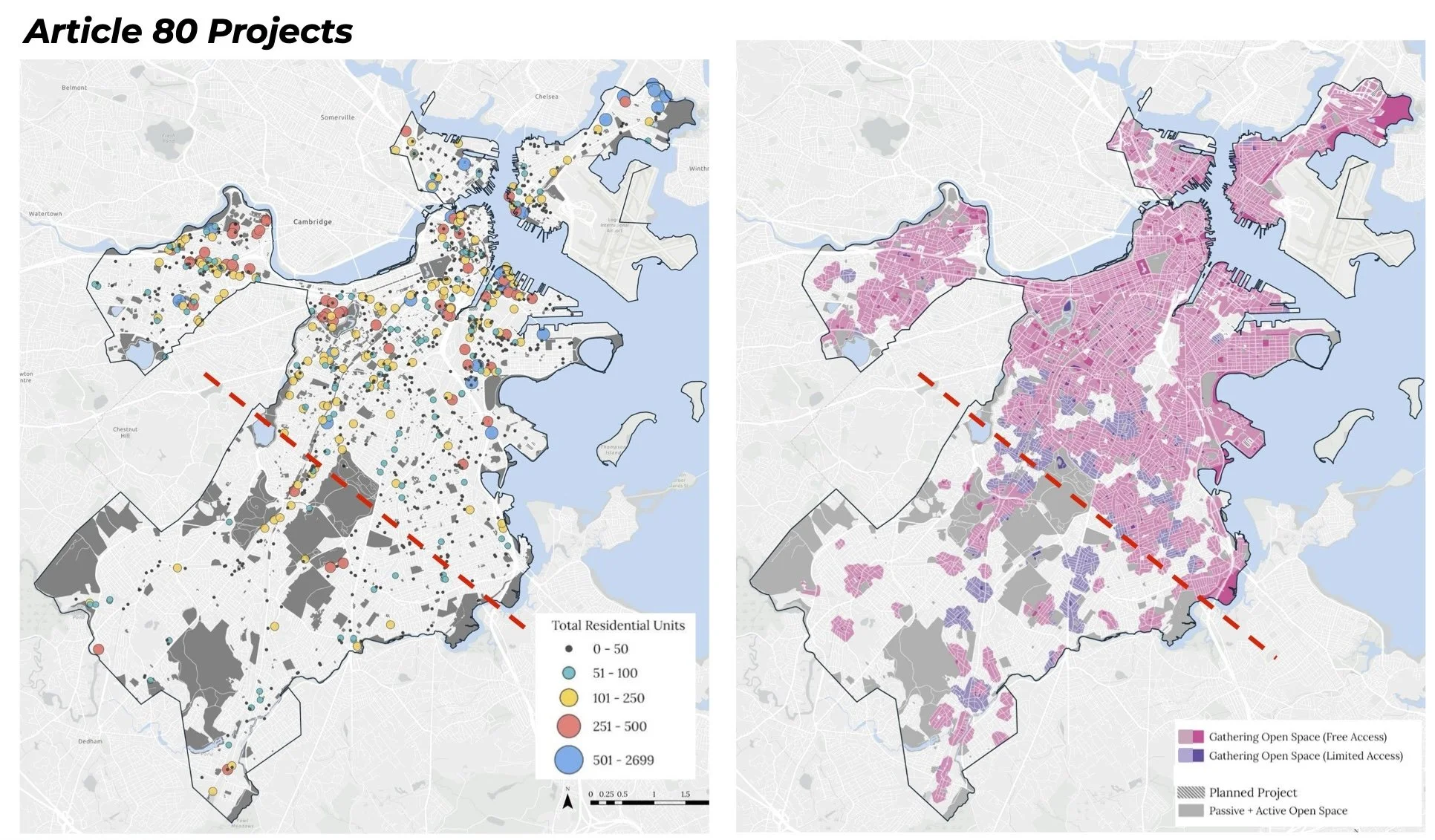 Image 6 of 6