
 Image 1 of 5
![[For printing and translation] BHAEngageReport_Final_Page_017.png](https://images.squarespace-cdn.com/content/v1/64515204013ff73c26e3d5a4/94cfe34d-c969-4291-859f-653f475cc483/%5BFor+printing+and+translation%5D+BHAEngageReport_Final_Page_017.png) Image 2 of 5
Image 2 of 5
![[For printing and translation] BHAEngageReport_Final.jpg](https://images.squarespace-cdn.com/content/v1/64515204013ff73c26e3d5a4/1c8dce0c-0ade-49c8-9f20-76c0b397c6e4/%5BFor+printing+and+translation%5D+BHAEngageReport_Final.jpg) Image 3 of 5
Image 3 of 5
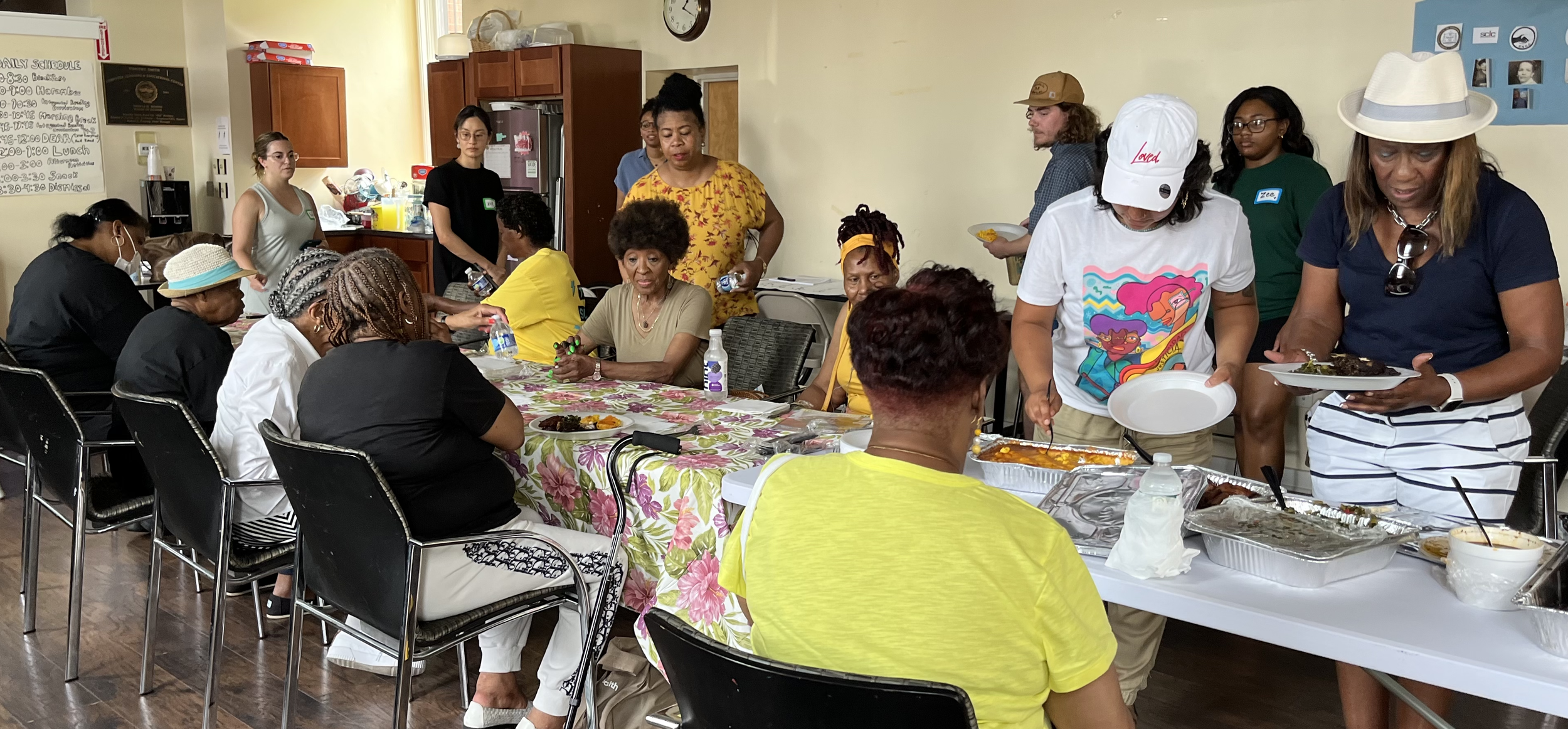 Image 4 of 5
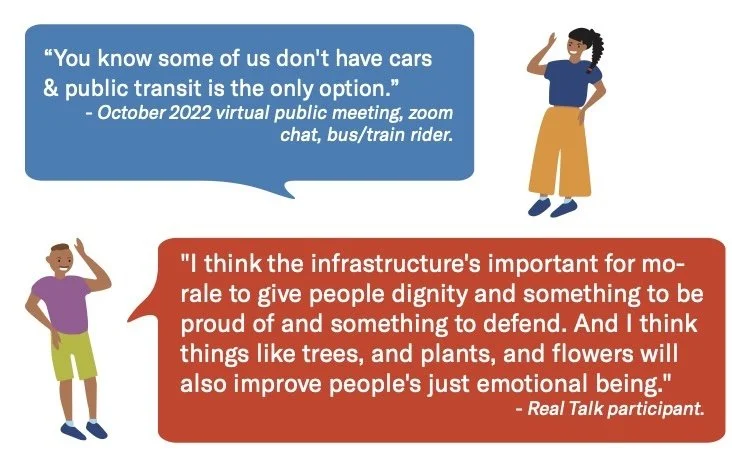 Image 5 of 5
Location: Boston, MA
Status: 2021-2023
Client: City of Boston Transportation Department
Collaborators: Toole Design Group, Civic Designers, Powerful Pathways, Consult Lela, RKG, various community organizations
Impact Area: Non-traditional Partnerships, Equitable Decision-making Strategies
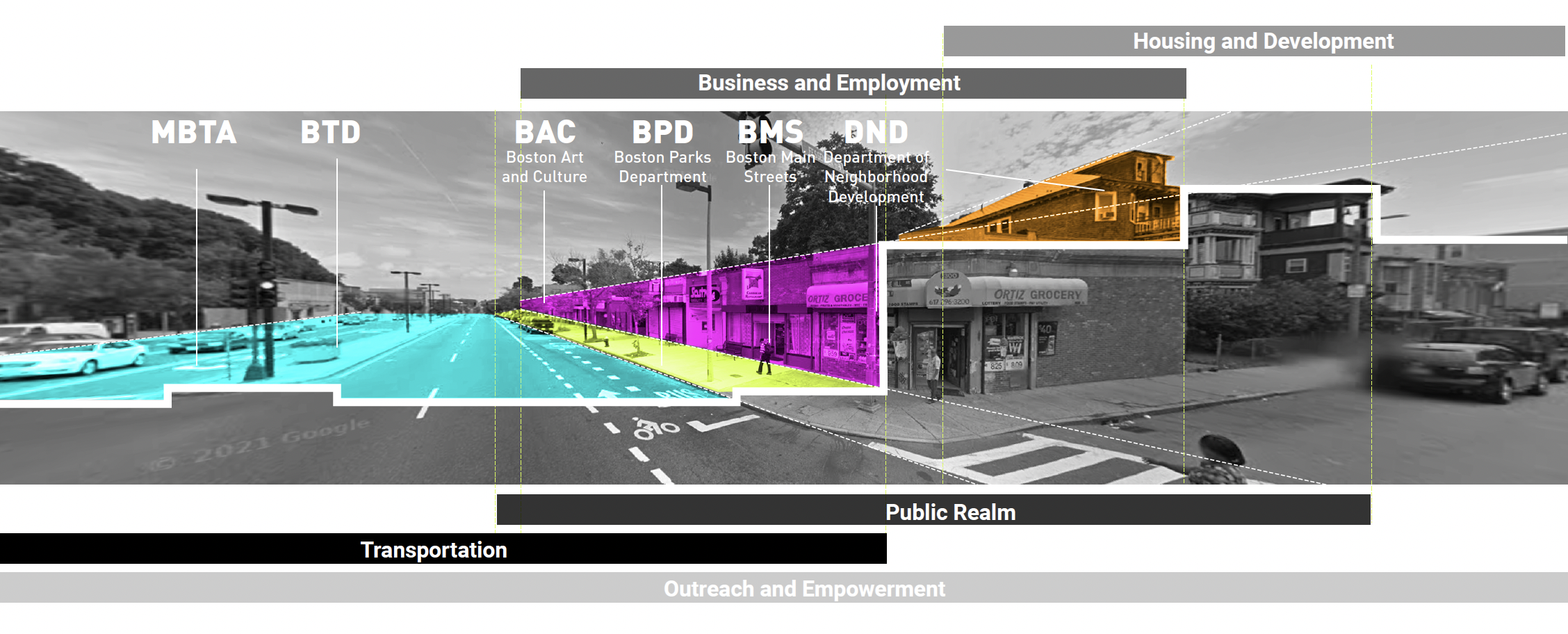
Blue Hill Avenue is a predominantly Black corridor through Roxbury, Dorchester, and Mattapan, a lifeline for thousands and, for as long as anyone could remember, a street underserved by the city's investment in infrastructure and transit. Its problems were visible, including heavy traffic, slow buses, unsafe crossings, crumbling sidewalks, but the first question the project had to answer was about who was in the room. Public meetings skewed toward older, car-dependent residents, while the renters, caregivers, and transit-dependent families most affected by bus delays were largely absent. The team treated that gap as the design problem.
Rather than answer the city's RFP immediately, a cross-section of community organizations and design firms convened to ask whether the project should be taken on at all, and how. The proposal that followed positioned community-based organizations as scope- and feeholding co-consultants to the city, compensated as full participants rather than stipend recipients. The work itself began with a co-authored practice agreement, a shared values document led by Allentza Michel of Powerful Pathways, that became a living mechanism for accountability. The budget carried the same conviction: a single hourly rate for everyone on the team, so community partners' time and judgment were contractually valued as equal to the consultants'.
The campaign that followed connected with more than 2,800 people and 16 agencies, collecting over 2,000 recorded comments across two years and 26 engagement methods, with targeted outreach to young people, bus riders, and bus operators.
Location: Boston, MA
Status: 2021-2023
Client: City of Boston Transportation Department
Collaborators: Toole Design Group, Civic Designers, Powerful Pathways, Consult Lela, RKG, various community organizations
Impact Area: Non-traditional Partnerships, Equitable Decision-making Strategies
Blue Hill Avenue is a predominantly Black corridor through Roxbury, Dorchester, and Mattapan, a lifeline for thousands and, for as long as anyone could remember, a street underserved by the city's investment in infrastructure and transit. Its problems were visible, including heavy traffic, slow buses, unsafe crossings, crumbling sidewalks, but the first question the project had to answer was about who was in the room. Public meetings skewed toward older, car-dependent residents, while the renters, caregivers, and transit-dependent families most affected by bus delays were largely absent. The team treated that gap as the design problem.
Rather than answer the city's RFP immediately, a cross-section of community organizations and design firms convened to ask whether the project should be taken on at all, and how. The proposal that followed positioned community-based organizations as scope- and feeholding co-consultants to the city, compensated as full participants rather than stipend recipients. The work itself began with a co-authored practice agreement, a shared values document led by Allentza Michel of Powerful Pathways, that became a living mechanism for accountability. The budget carried the same conviction: a single hourly rate for everyone on the team, so community partners' time and judgment were contractually valued as equal to the consultants'.
The campaign that followed connected with more than 2,800 people and 16 agencies, collecting over 2,000 recorded comments across two years and 26 engagement methods, with targeted outreach to young people, bus riders, and bus operators.